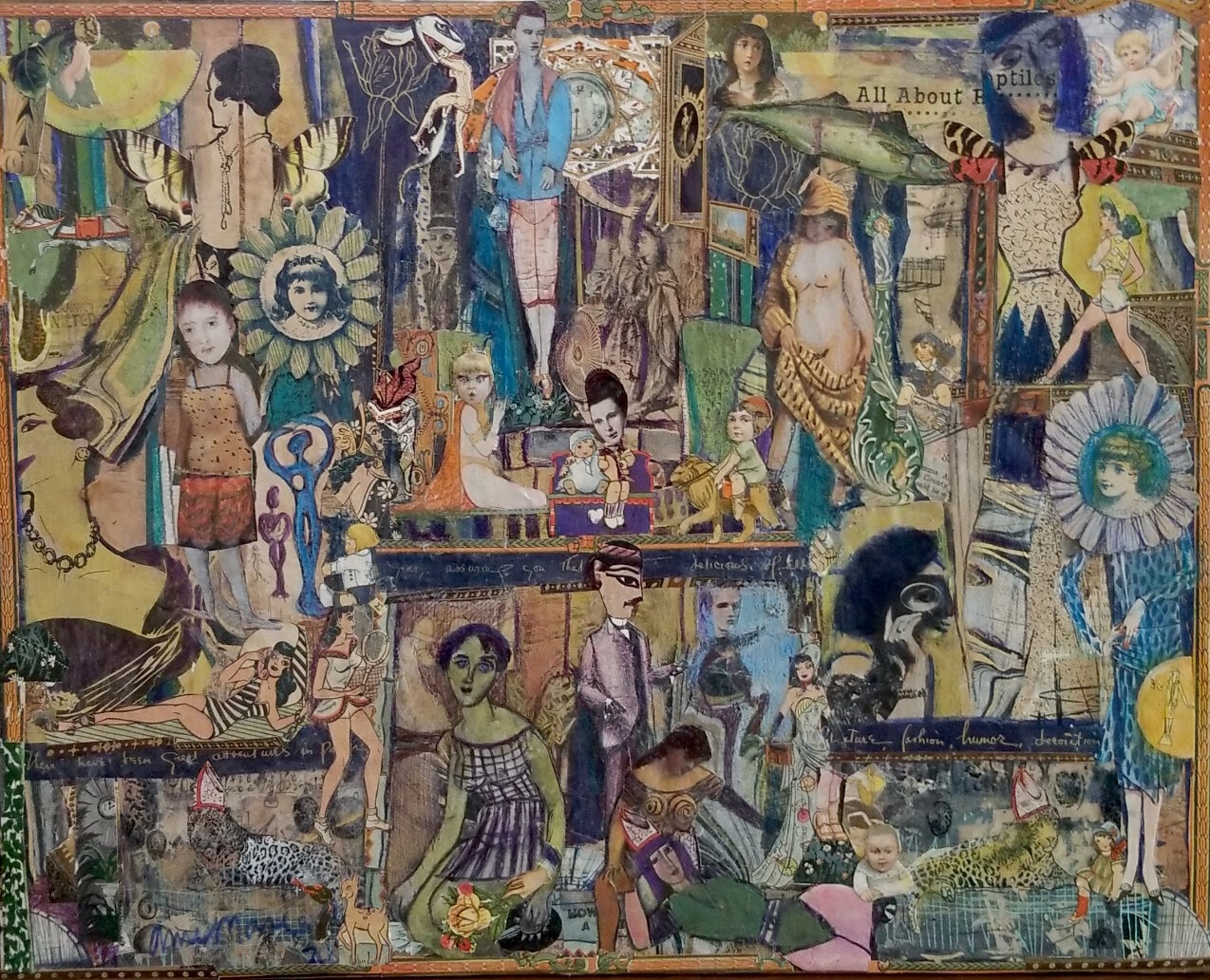
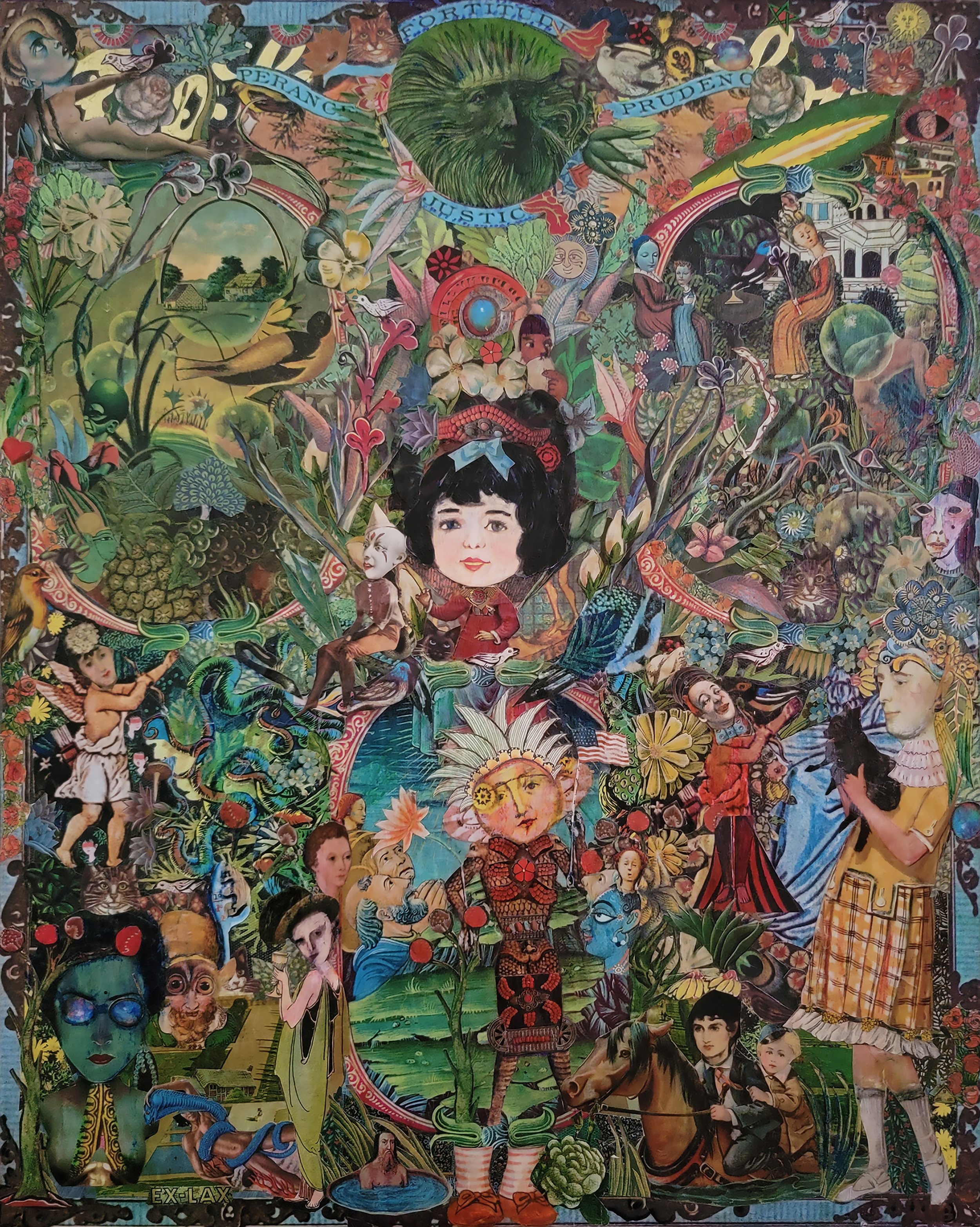
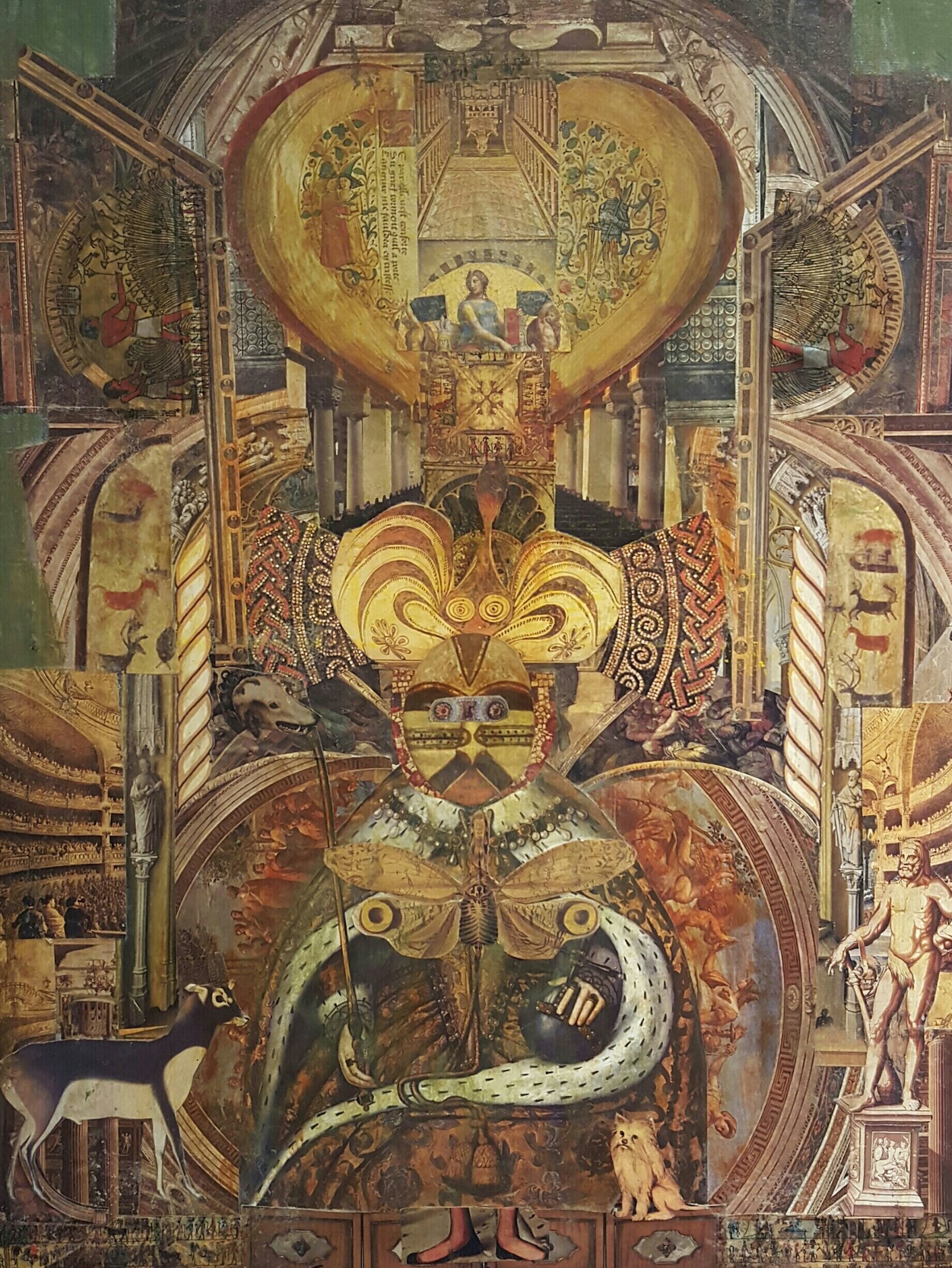
Carmen 2012 by AMG 18 x 24" MM on Wood

Anne Marie Grgich Exhibition and Art History

Anne Marie Grgich

‘Annemarie Grgich – archaeologies of the extraordinary everyday'

Curated by Professor Colin Rhodes, Dean, Sydney College of the Arts

Open 4 October 2009 – December 13 2009

The University Art Gallery is located in War Memorial Arch, the northern end of the historic University of Sydney Quadrangle, Science Road, The University of Sydney. It is open Monday to Friday, 10am to 4.30pm and Sundays, 12 to 4pm. All are welcome and entry is free. Phone: (02) 9351 6883. For further information please contact Nerida Olson, Public Relations and Marketing Manager, Sydney College of the Arts on (02) 9351 1016 or n.olson@sca.usyd.edu.au

Anne Marie Grgich (b.1961) grew up in Portland, Oregon and moved to Seattle in 1987, where she lived more or less continuously before returning to Portland last year. She began making spontaneous art at the age of fifteen, mostly by painting surreptitiously on the inside pages of books in the family library, or making collage art with basement junk. So began the extraordinary journey with the idea of the book as transformative vehicle and a sophisticated, experimental artmaking process that is embodied in the works in this her first Australian solo exhibition.

Her journey as an artist really began, though, with a kind of physical tabula rasa caused by a car accident. `My childhood came to an abrupt halt in 1981,' she says, `I became a child again, losing all my wits, but retaining my child when I woke up from a coma. It's like the formative years were erased, forcing me to relearn a lot over the next ten years.` Years of turbulence followed, with intense downs, but also ups, including the birth of a son who remains the most important force in her life. These were all experiences that fed, and continue to feed into the very substance of Anne Marie Grgich's art. And they can be intuited in each work by viewers who take the time to really look.

Archaeologies of the Extraordinary Everyday presents work produced in the last five years or so, much of which has been in a process of evolution throughout that time. Indeed, often works are only `finished` when they begin that lonesome journey away from the artist's care. Broadly split into handmade books and individual wall-pieces, the works share in common, besides an intense humanity, luminescence and great physicality, resulting from a creative process that typically combines collage, painting and the use of polymer resins, often thickly applied and in multiple layers. In this way, the resulting images appear simultaneously ancient and amazingly fresh and contemporary. In pieces like Chambrun (2008) and Little Miss Sci Fi (2008), for example, the icon meets the modern vernacular, embodied in visual texts that are expressly archaeological in character.

Pictorially, Grgich's images operate in an almost claustrophobically shallow space. Often a single iconic bust confronts the viewer directly, its basic form realised simply, as in three great works from 2009, Vale's Cure, Florentia or The Chi-est-a-head. Yet the simplicity of this overall representational superstructure is a necessary organising device for the complexity of the interdependent units that constitute the physical object that is the work. Florentia, for example, is essentially pieced together from wallpaper shapes, ranging from embossed heraldic floral designs and purple flock, that predictably stands for itself as background, to dense pink-flower and black-ground paper that remarkably serves for facial skin. All of this is overlaid with paint, printed stamps, decals and resin that interweave subtly, creating a characteristically uncanny feel, from sensuous painted lips to blue butterfly stamps caught in the layering that culminates in the woman's eyes, and the strange third eye conjured from an ethereal decal of an eighteenth-century face.

The Chi-est-a-head, if anything, renders the uncanny more deeply, in spite of its initially apparently lighter air. The artist utilises what has been called the Arcimboldo effect, referring to those portraits rendered from composites of fruit, vegetables or animals by the sixteenth-century Italian painter, and much loved as a device by the surrealists in the twentieth century. Thus, the tiara is a line of little Chinese boys and green horses, while the pattern on the woman's collar consists of two rows of schematic electrical plugs and flex. Nothing is predictable, however, and somehow inverted sumo wrestlers and two little birds make up the forehead, and a `cooky-cutter` label provides the smile. A small, indistinct, inverted clown figure forms a rather more demonic third eye.

Anne once said, `I live a lot. And the detritus of my pathways get funnelled into my art eventually. I'm probably working on hundreds of things at a time, but I don't have time to count. Just when I finish one thing, a ton of other things are calling my name. So much is involved in my work and where it comes from, all at once.` Her working method is resolutely intuitive, with images growing, as it were, out of the objects close at hand. In this sense, she is akin to others like Kurt Schwitters or Robert Rauschenberg who also, in their own way, commandeered and transmogrified the vernacular in their art, though without the figurative intent of Grgich. Nowhere is this clearer than in the small 'Rooster' Book (2003), which literally threatens to burst out from the constrictions of its book-ness as a result of the density and cacophonic physicality of its pages.

The book lies at the very centre of Grgich's practice, developing out of the teenage journals she kept. It was, for a long time, the primary site of visual communication for her, and unlike most painters who come to book making from the production of discreet images, Anne's wall-pieces grew out of her books. Indeed there is often something of the manuscript sheet, or object-to-be-held about these paintings, as with My Cousin is Amy Grgich (2009) and Scarlett's Fever and (Visions) (2008) respectively. Significantly several of the one-offs in the exhibition are excerpts from books; that is, pages originally meant for books but which never made it, or ones that are yet to become part of a book, for example, The Land of the Lost (2008-09), The Turtle (2008-09), The Red Bird (2007-09) and Yellow Butterfly Transformation Lyric (2009).

The books share in common a rugged physicality and fragility that makes handling them an intense experience. Every turn reveals a new marvel, a singular work of art in itself. Yet, reaching each page is fraught with the fear of destruction, as the object creaks, sticks and resists the inquisitive hand. Some works develop on the ground of an existing book, which might be textual, as in Braille Book 4 (2000-04) - in this case the intensely visual collides with the necessarily tactile - or, more often in the large-scale pieces, a wallpaper sample book, as in The Golden Arrow (2005-07). Others, like 'Rooster' Book are made from scratch, whilst the wittily titled, 260 cm long Fifty-two Page Moleskin Facebook (2008-2009) is a deconstruction/reconstruction piece originating as an ordinary pocket notebook.

The most obviously sculptural object in the exhibition, The Opulent Goddess Book (2003-2009), stretches the definition of book to its limits. Its ten pages of goddess portraits are an orgy of encrusted jewels and other objects, encased by two heavy wooden frames. More `folksy`, perhaps, than any of the other works in the show, it is a kind of vernacular reliquary for the life force and power of the feminine; a more obvious symbol of the élan vital that animates all of the work.

Colin Rhodes

PDF Catalog for exhibition Annemarie Grgich- archaeologies of the extraordinary everyday

IMG_7552

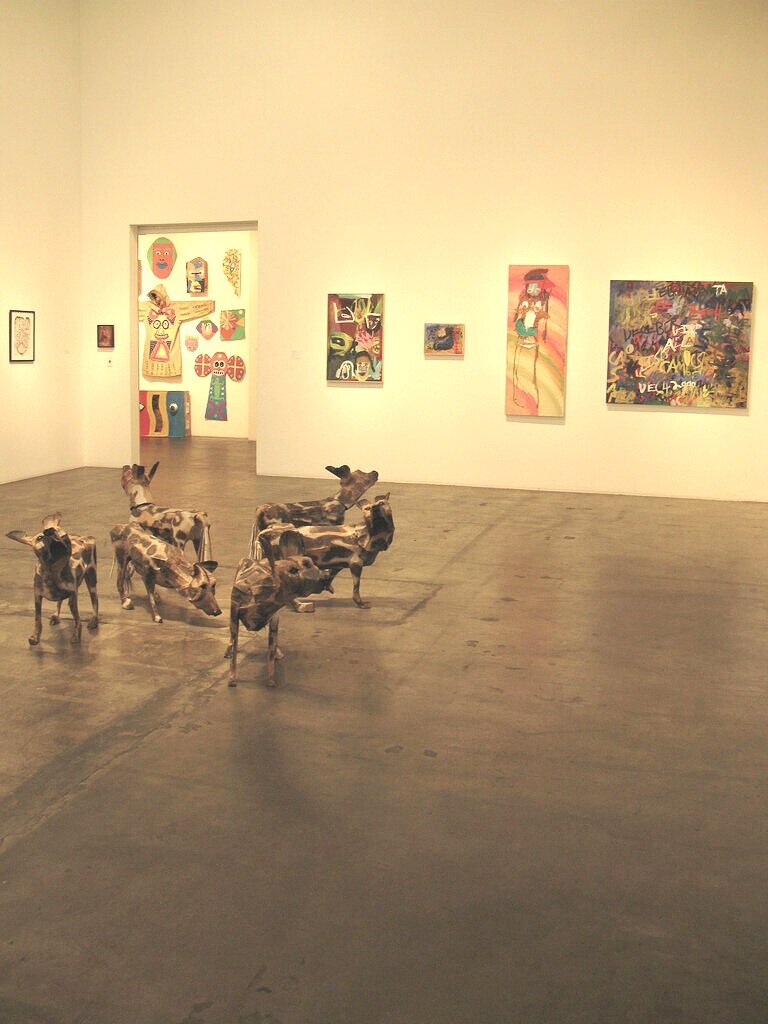
Annemarie Grgich – archaeologies of the extraordinary everyday' at Sydney University Art Gallery 2009

July 2012 Peltz Gallery, Milwaukee, WI. Annual Remarkable Woman Show

Winslow Art Center, Anne Grgich Solo Exhibition and Workshops, May 2012, Bainbridge Island, Anne Grgich is a life-long portrait painter and collage and book artist, internationally known for her images of faces and passionate raw art developed over several decades. Winslow Art Center 2012

Pacini Lubel Gallery, Seattle, WA

Gallery Bourbon Lally, NY Haiti Canada

Henry Boxer Gallery, London UK

Anne Grgich Facebook Group

Accidental Genius: Art from the Anthony Petullo Collection 2012 Milwaukee Art Museum Programs

PDF Catalog for exhibition "Accidental Genius"

Groundwaters by Charles Russell, author of Groundwaters: A Century of Art by Self-Taught and Outsider Artists (Prestel, 2011)

The Accidental Genius, Collection donated by Anthony Petullo for permanent collection at The Milwaukee Art Museum, WI See more photos from the AU exhibition

American Visionaries, group exhibition curated by Damian Michaels for Orange Regional Art Gallery will be from 6 April - 13 May 2012 in Orange, NSW, Australia

Astoria's HipFish Magazine recent article written about Anne Grgich by Steve Lipponcott

Crossing Over the Bridge, residency at Pottery NW

The Museum of Peoples Art recent group exhibition curated by Anne Grgich with Kandace Manning

Folk Magic, curated by Anne Grgich with Kandace Manning in 2009 and forthcoming Anne Grgich Exhibition-Barristers Gallery, New Orleans in 2012

Musée de la Création Franche Bègles

Anne Marie Grgich: Archaeologies of the extraordinary everyday by Colin Rhodes

Art in Review By ROBERTA SMITH Published January 24, 1997 "But outsider art is also shown to be alive and well in the hands of the living, specifically in the intense mosaiclike collages of Anne Grgich (at Mia Gallery); the radiant spaceship drawings of Ionel Talpazon and the cut metal reliefs of Clyde Angel (both at American Primitive), and the sexually charged figurative paintings of Don DeNarie (at Nancy and Lenny Kislin). "Poetry must be made by all, Lautreamont said, and sometimes it is." ROBERTA SMITH

Art of the Ordeal, New Orleans, by D. Eric Bookhardt

Garde Rail Gallery, Method of Annie: Twelve years of Anne Grgich

2009 Anne Grgich returns to Portland, Oregon, her home town

Arts Corps, Seattle they put the art back in schools

Halle Saint Pierre, Noir Sur Blanc

The Carriage House Studios-Anne Grgich Teaching Blog

The Northwest Drizzle, Death, pestilence & politics in Portland galleries, August 2001 by Jeff Jahn

The Hand Connected to the I - An exhibition of paintings, sculpture and works on paper by twelve trained and untrained artists from Europe and the United States at the Katonah Village Library Galleries, 26 Bedford Road, Katonah, New York.

Margin to Centre: Visionary Art SASA Gallery

Margin to Centre Invitation

2009 KBOO Interview with Anne Grgich by Eva Lake

Pujara Pluma

"Anne Grgich is one of the most original and innovative of the group of American artists known as Outsiders. Completely self-taught, and on the cover story of Raw Vision Magazine (#22), she became known for her one-of-a-kind books filled with page after page of impassioned, expressionistic faces and figures. Grgich often employs collage and vigorously applies layer after layer of over-painting, covering found texts and images, yet allowing some of the underneath to remain visible. This layering suggests generations of mystery and mystique to her exotic characters." - Phil Demise-Smith, Gallery A Studio

Gallery and information email: annemariegrgich@gmail.com

© 2012 Anne Marie Grgich

Website under construction March 2012